
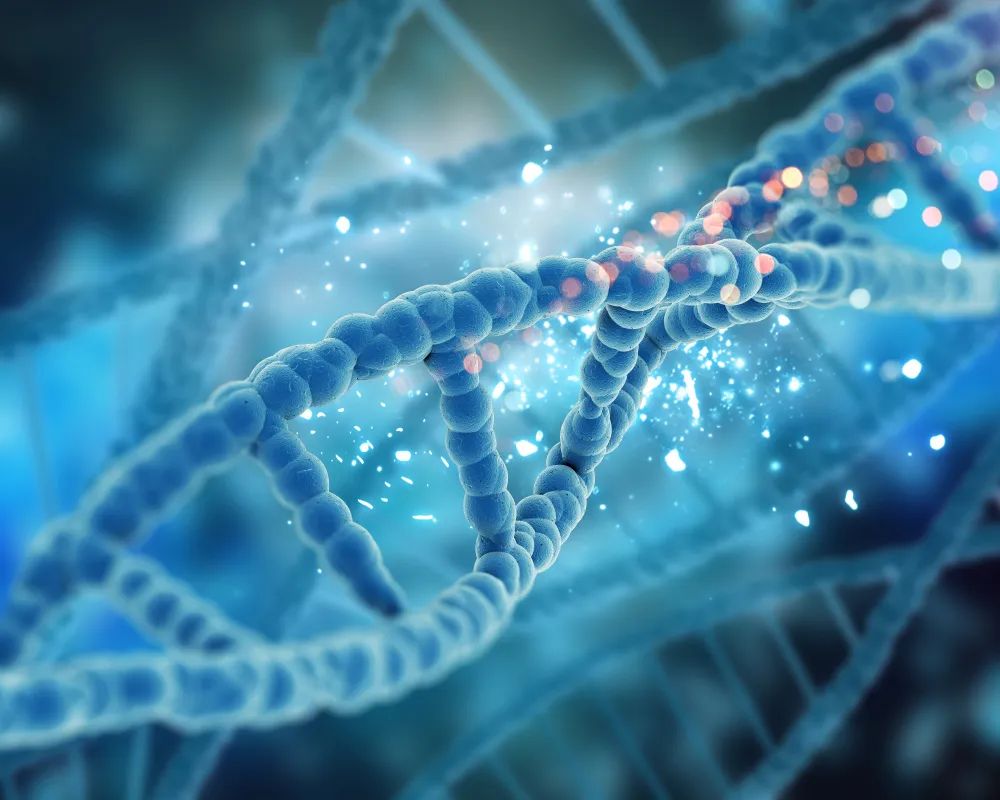
There was a time when biology felt like a story already written. Scientists could read it, decode it, and try to understand its meaning, but they could not change the script. DNA synthesis has quietly rewritten that relationship.
Today, biology is no longer just observed. It is designed. DNA synthesis allows scientists to build genetic sequences from scratch, almost like writing lines of code. But this is not ordinary code. These sequences can guide how cells behave, how proteins form, and how entire biological systems function. It is, in many ways, the closest science has come to writing life itself.
What DNA Synthesis Really Means
At its simplest, DNA synthesis is the artificial creation of DNA sequences in a controlled environment. Instead of extracting genes from living organisms, scientists assemble them base by base, adenine, thymine, cytosine, and guanine, until a desired sequence emerges.
But simplicity ends there. Once DNA can be built, it becomes possible to design genes with specific purposes, modify biological pathways, and create entirely new genetic constructs. This shifts biology from something fixed to something flexible, moving it closer to a design driven system rather than a purely natural phenomenon.
A Changing Relationship with Biology
Perhaps the most striking impact of DNA synthesis is how it changes perspective. Biology is no longer something we simply inherit. It becomes something we can shape, within limits, but with growing confidence. It encourages a shift in thinking, from asking what exists to asking what is possible.
As this mindset spreads across research environments and biotechnology systems, the momentum behind DNA synthesis is becoming increasingly visible. What once seemed like a niche capability is steadily becoming essential.
I recently came across a report by Roots Analysis that really put things into perspective. According to them, the global DNA synthesis market, valued at USD 1.20 billion in 2025, is projected to reach USD 1.46 billion in 2026 and USD 8.63 billion by 2035, with a 22% CAGR during the forecast period 2026 to 2035.
From Reading to Writing
For decades, breakthroughs in genetics focused on sequencing, understanding what DNA says. DNA synthesis changes that direction.
Now the question is not just what is written, but what can be written next. This shift transforms how research is conducted. Instead of waiting to discover useful genes in nature, scientists can design them directly. It reduces timelines, expands possibilities, and opens pathways that were once inaccessible.
How the Process Works
Though the idea feels almost philosophical, the process itself is precise and methodical. DNA synthesis typically involves building short DNA fragments known as oligonucleotides, assembling them into longer sequences, and verifying their accuracy through sequencing techniques.
Each step requires careful control. Even a small error, such as a single misplaced base, can change how a gene behaves. This highlights the importance of precision when working with life’s blueprint.
Where DNA Synthesis Is Making a Difference
The real power of DNA synthesis lies in what it enables. In medicine, it plays a crucial role in developing gene therapies and modern vaccines by allowing scientists to design sequences that instruct cells to produce therapeutic proteins or trigger immune responses.
In drug discovery, custom DNA sequences enable researchers to study biological pathways more efficiently, accelerating the development of new treatments. In agriculture, crops can be engineered for improved resilience, higher yield, and enhanced nutritional value. In industrial biotechnology, engineered organisms are used to produce biofuels, enzymes, and sustainable materials.
Across these areas, DNA synthesis acts as a foundational tool that supports innovation quietly but effectively.
The Subtle Complexity Behind It
For all its promise, DNA synthesis is not without challenges. Long sequences are more difficult to assemble accurately, costs tend to increase with complexity, verification requires time and precision, and ethical considerations continue to evolve alongside the technology.
These challenges do not restrict progress, they refine it. They ensure that development remains careful, deliberate, and responsible.
Looking Ahead
As automation improves and technologies become more accessible, DNA synthesis is expected to become faster, more accurate, and more affordable.
The future points toward a landscape where genetic designs can be tested digitally before being created, personalized therapies can be developed for individuals, and entire biological systems can be engineered with clear intent. The boundaries are not disappearing, but they are evolving.
Final Thoughts
DNA synthesis does not replace nature; it works alongside it. It allows scientists to engage with biological systems rather than simply observe them.
There is something quietly profound in that shift. In laboratories around the world, sequences are being written with precision and care. Each one represents a small but meaningful step toward understanding not only how life functions, but how it can be guided.
And in that quiet act of creation, science moves from reading the story of life to shaping what comes next.
