Aging skin does not change overnight. Fine lines slowly become deeper folds as collagen production declines and repeated facial movements crease the skin. Over time, moisturizers and creams stop working because the problem is no longer on the surface. It is structural. This is why many people searching for laser resurfacing for wrinkles are usually dealing with lines that have already settled into the skin and cannot be improved with basic skincare alone.
Laser skin resurfacing targets the root cause of wrinkles rather than temporarily hiding them. Instead of filling or freezing the skin, it stimulates the body to rebuild healthier and smoother tissue. Understanding how the treatment works and what the before and after process looks like helps set realistic expectations and explains why it is considered one of the most effective non-surgical anti-aging procedures.
Why Deep Wrinkles Form Over Time
Wrinkles develop when collagen and elastin fibers begin to break down. These proteins are responsible for keeping skin firm and flexible. In youth, the body constantly repairs damaged tissue, but aging slows that repair process. Sun exposure accelerates it even further by damaging the deeper layers of skin.
At first, wrinkles only appear during expressions. Eventually they remain visible even when the face is relaxed. These are known as static wrinkles. Deep forehead lines, smile folds, and lines around the mouth are common examples. At this stage, topical treatments cannot reach the deeper dermal layer where the damage exists.
This is where laser resurfacing becomes effective because it works below the surface rather than on top of it.
How Laser Resurfacing for Wrinkles Works
Laser resurfacing uses controlled light energy to remove damaged skin layers while heating the underlying dermis. The heat stimulates fibroblast cells, which produce new collagen. As the skin heals, fresh tissue replaces the old uneven layer.
There are two primary actions happening during treatment. First, the outer damaged layer is gently removed, which improves texture and tone. Second, deeper heat triggers natural regeneration. Over the following weeks, the skin gradually thickens and tightens.
Unlike injectables that relax muscles, laser treatment improves the quality of the skin itself. The goal is smoother and firmer skin rather than limited movement.
Types of Laser Treatments Used
Different laser technologies are used depending on wrinkle severity and recovery preference. Ablative lasers remove thin layers of skin and are usually recommended for deeper wrinkles. Non-ablative lasers heat the tissue without removing the top layer, creating a milder improvement with faster recovery.
Fractional lasers are the most commonly used because they treat microscopic columns of skin while leaving surrounding areas intact. This speeds healing while still producing significant collagen remodeling. The provider selects the intensity based on skin condition and goals.
What Happens During the Procedure
Before treatment, the skin is cleansed and numbed with a topical anesthetic. Some patients also receive cooling air or mild oral medication for comfort. The laser handpiece is then passed over the targeted areas in a controlled pattern.
The procedure typically takes between twenty minutes and one hour depending on the treatment size. Patients often describe the sensation as warmth or tiny sparks against the skin.
Immediately afterward, the skin appears red and slightly swollen, similar to a sunburn. This reaction is normal and signals that collagen stimulation has begun.
Laser Resurfacing Before and After Timeline
During the first few days, the skin feels tight and warm. Mild peeling may occur as the old damaged layer sheds. Around day four to seven, fresh skin begins to appear smoother and brighter.
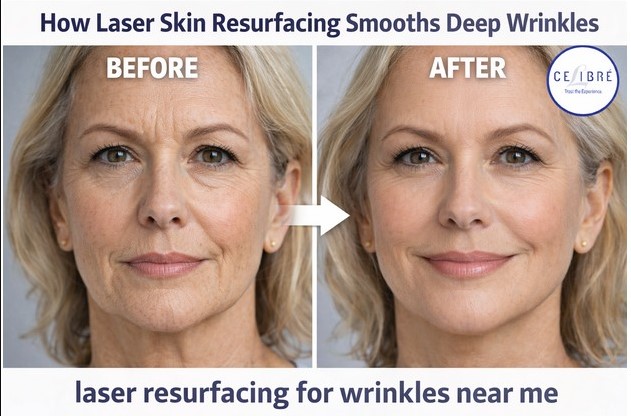
After two weeks, redness fades significantly and texture improves. However, the most important changes occur gradually beneath the surface. Over the next one to three months, collagen continues to rebuild. Deep wrinkles soften as the skin thickens and lifts naturally.
This delayed improvement is the reason laser resurfacing for wrinkles often looks better with time rather than immediately after treatment.
How Much Improvement Can You Expect
Results vary depending on wrinkle depth and treatment strength. Fine lines may nearly disappear, while deep wrinkles become significantly softer and less noticeable. Instead of sharp folds, the skin appears smoother and more even.
One major advantage of laser resurfacing is natural movement. Because muscles are not frozen, facial expressions remain unchanged. People usually notice that you look healthier rather than treated.
Multiple sessions may be recommended for severe wrinkles to achieve optimal smoothing.
How Long Results Last
Unlike temporary treatments, laser resurfacing produces long-term improvement because new collagen forms. Many patients enjoy results for one to three years depending on skincare habits and sun protection.
The aging process continues, but at a slower visual rate because the skin structure has been rebuilt. Maintenance treatments and sunscreen use help extend results significantly.
Safety and Recovery Considerations
Laser resurfacing is considered safe when performed by experienced professionals. Temporary redness, dryness, and sensitivity are common during healing. Proper moisturizing and sun avoidance are essential in the first weeks.
Complications are rare but may include prolonged redness or pigmentation changes if aftercare instructions are ignored. Following provider guidance greatly improves healing speed and outcome quality.
Who Is a Good Candidate
Ideal candidates are individuals with moderate to deep wrinkles, sun damage, or uneven skin texture. It is especially effective for people who want improvement without surgery. Those with very loose skin may still benefit, but may require additional treatments.
A consultation determines skin type, treatment depth, and expected improvement level.
Frequently Asked Questions About Laser Resurfacing for Wrinkles
Is laser resurfacing painful?
Most patients feel heat and mild discomfort, but numbing cream makes the procedure tolerable.
How long is recovery time?
Mild treatments heal within a week, while deeper resurfacing may require up to two weeks of recovery.
Can laser remove deep wrinkles completely?
It significantly softens deep wrinkles but may not remove extremely deep folds entirely.
How many sessions are needed?
Some patients need one treatment, while others benefit from a series depending on wrinkle depth.
Are results permanent?
Results are long lasting but not permanent because natural aging continues.
When will I see results?
Initial improvement appears in two weeks, with continued improvement over three months.
Is laser resurfacing better than fillers?
They serve different purposes. Laser improves skin quality, while fillers restore lost volume.
Celibre Medical , Botox, Restylane, Juvederm, Dysport Injections | IPL. We offer the safest and most effective laser and cosmetic injection treatments available, only using the most current FDA-approved procedures. By delivering superior results and the highest patient-care level, we have become a trusted name in the laser dermatology and cosmetic injection industry.
Final Thoughts
Laser resurfacing remains one of the most effective ways to rebuild aging skin from within. By stimulating collagen and replacing damaged layers, it smooths deep lines rather than simply covering them.
For individuals searching laser resurfacing for wrinkles near me, the biggest advantage is natural and progressive improvement. The skin becomes firmer, clearer, and more youthful over time while maintaining normal facial expression. With proper care and sun protection, the benefits can last for years, making it a powerful long-term anti-aging solution without surgery.
